The night train to Surat Thani
Fourteen hours, one folding bunk and a carriage full of people going home.
The sleeper leaves Krung Thep Aphiwat at half past six in the evening and arrives at Surat Thani sometime around seven the next morning, give or take an hour that nobody on board treats as a problem.
I have taken this train nine times. I could fly it in seventy minutes for about the same money. I keep taking the train.
“You go to bed in central Thailand and you wake up somewhere unmistakably different — limestone out of flooded rice, and a lower, greener sky.”
The second-class air-conditioned sleeper is the sweet spot and everybody who travels this line regularly knows it. Lower bunk if you can, because it has the window and more headroom. The seats face each other until about eight o'clock, when a steward comes down the carriage with a practised violence and converts the whole thing into bunks in roughly four minutes per bay, and then the corridor fills with people holding their toothbrushes.
What I love about it is that it is not a tourist experience. It is transport. Roughly two-thirds of the carriage on any given night is Thai: students going home, a woman with a sleeping toddler and an alarming volume of luggage, three navy conscripts on leave, a man in his sixties who has brought his own thermos. The backpackers cluster at the ends and are mostly asleep by ten.
Dinner comes down the aisle on a trolley and it is fine — basil chicken, a fried egg, sticky rice, sold by a man who has clearly decided that the exact same intonation will work for twelve hours. Bring beer, bring fruit, bring more water than you think.
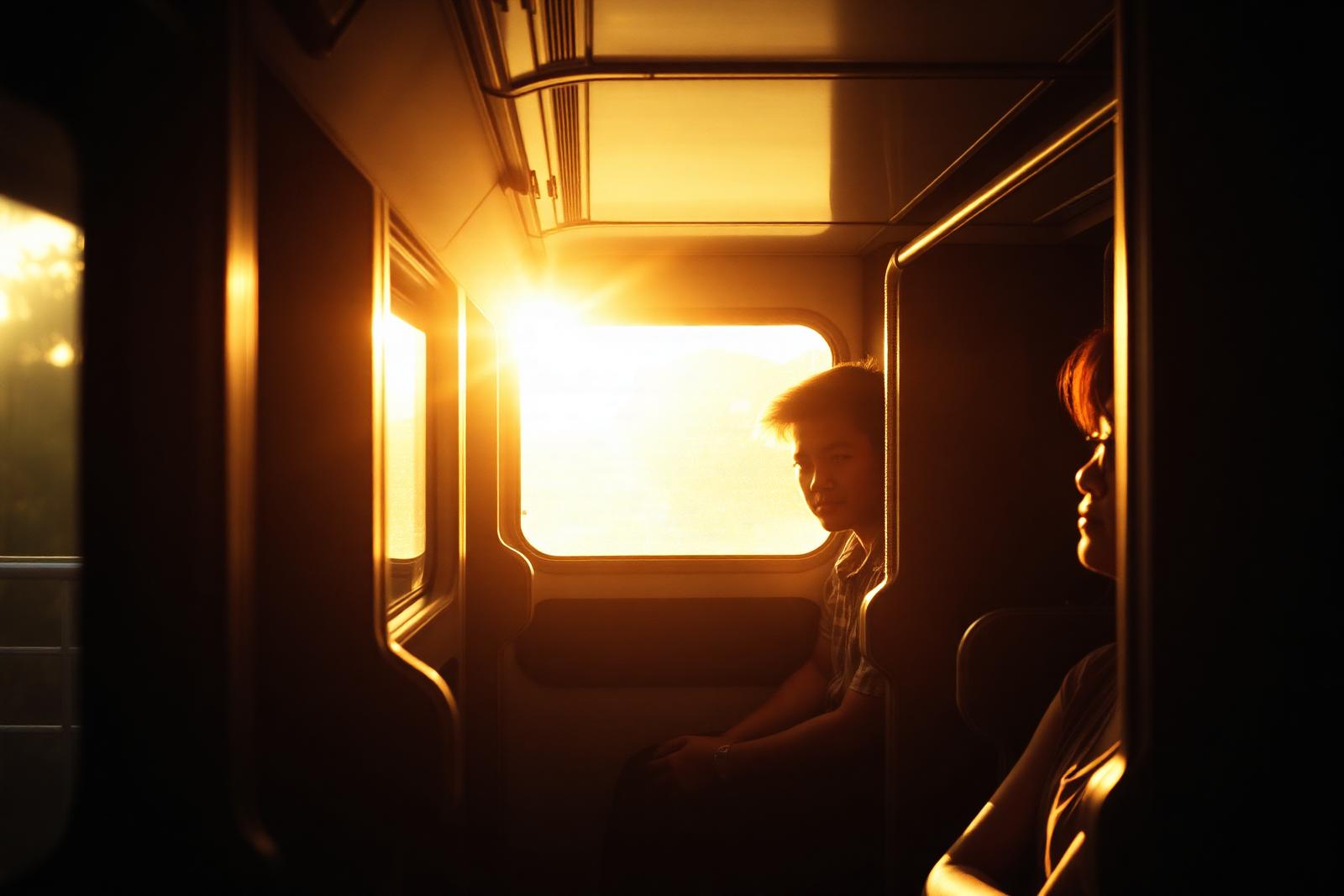
The green light is the thing I remember between trips. When the main lights go down, the carriage runs on a low green nightlight, and every curtain along the corridor is a slightly different shade of glowing depending on whether the person behind it is still on their phone. Somebody always snores. Somebody's alarm always goes off at four for a station that is not theirs.
At some point in the small hours you wake up because the train has stopped, and if you lift the blind there is a small station with two strip lights, a bench, a dog, and a stationmaster standing perfectly still in the dark. Then it moves again.
You cross into the south while you are asleep. That is the part that is genuinely worth the fourteen hours. You go to bed in central Thailand and you wake up somewhere unmistakably different: limestone standing out of flooded rice, rubber plantations in dead-straight rows, mosques instead of temples in some of the towns, a lower and greener sky. Around six the steward brings coffee and everyone raises their blinds at roughly the same time, which is the best twenty minutes of the journey.
At Surat Thani the whole carriage decants into a car park full of minibus touts shouting the names of islands. Koh Samui, Koh Phangan, Koh Tao. It is chaotic and it is fine and the prices are posted at the kiosk if you would rather not negotiate.
The practical notes: book at least a week ahead in high season and around Songkran book a month ahead. The state railway's online booking works, if inelegantly. Bring a fleece, because the air conditioning in second class is set by someone with a grudge. Do not put your bag under your head as a pillow and then also fall deeply asleep with the curtain open.
And take the lower bunk. I cannot stress this enough.